
How to Search Criminal Dockets
Every Platte County criminal docket lookup runs through Nebraska JUSTICE Case Information eServices. Begin with the court type, not the arresting agency or the city. Platte County Court holds misdemeanor, infraction, traffic, preliminary felony, and county-court juvenile matters. Platte District Court holds felony trial-level matters. The public one-time search is mainly a party-name search. It will not find a witness. With a common name, narrow things down by Platte County, court type, case type or subtype, year, or an exact case number where the portal offers those fields.
Each JUSTICE one-time search costs $17, even a no-result search. It returns up to 30 public cases and keeps results available for three calendar days. New entries can take about 24 hours to appear. A subscriber account unlocks more criteria for repeated or narrow searches. Even so, the public Register of Actions remains the key place to read dated case activity. The state's JUSTICE search landing page is the official starting point. It opens the door to a Platte County criminal docket lookup.
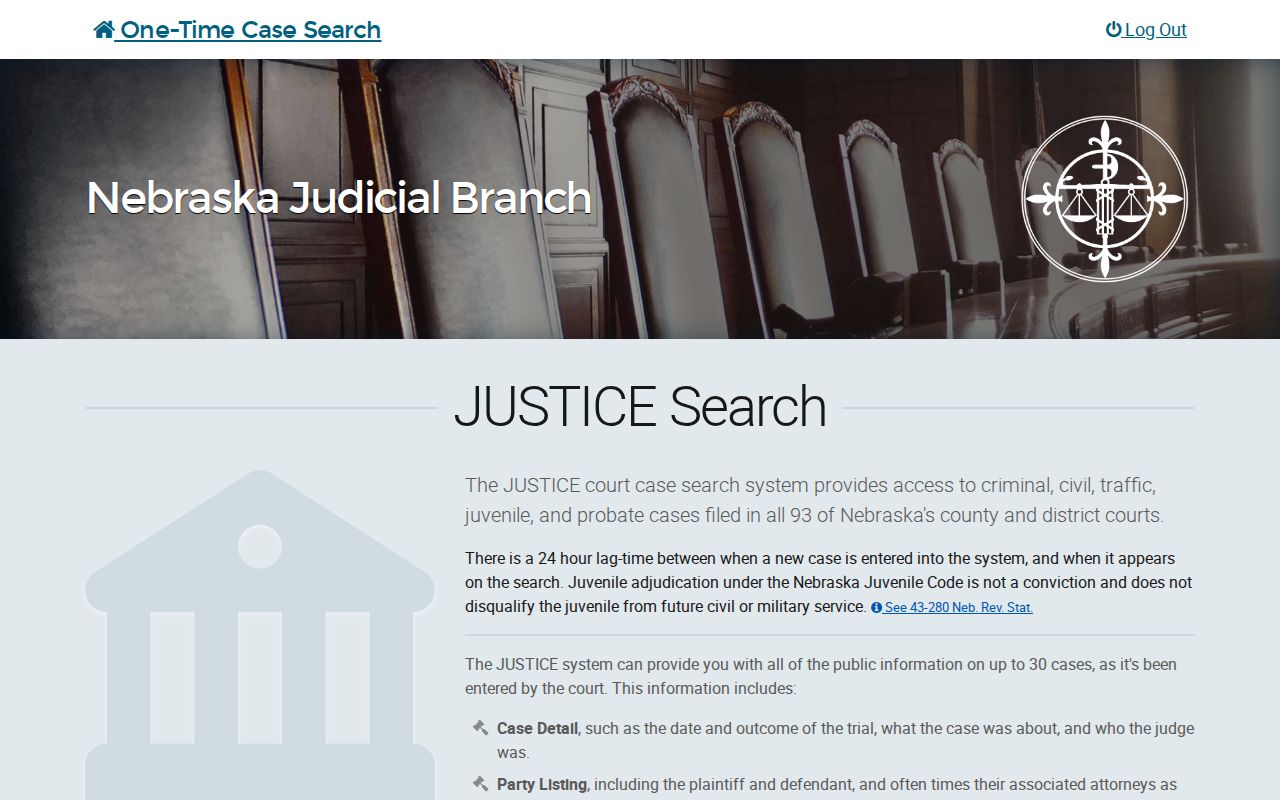
Write down the court and case number from a matching result. You will need both for any calendar search, clerk call, or copy request.
- Select the court that holds the Platte County criminal case.
- Search with a party name, then narrow the result when needed.
- Open the matching case summary and confirm the court, caption, and case type.
- Read the Register of Actions in date order for charges, settings, orders, and outcomes.
- Ask the clerk that keeps the case for a copy or certification when the online record is not enough.
Platte County Criminal Court Split
One courthouse does not mean one criminal docket. Platte County Court and Platte District Court share the Platte County Courthouse. Yet each office maintains only the cases assigned to its court. County Court handles misdemeanors, infractions, traffic, municipal-ordinance matters, and preliminary felony hearings. District Court takes felony trial-level matters after they reach that court. So a Platte County criminal search should rely on the court field in the result. Do not assume every charge stays in County Court.
| Platte court | Criminal docket coverage | Records contact |
|---|---|---|
| County Court | Misdemeanors, infractions, traffic, preliminary felony hearings, and county-court juvenile matters | Clerk Magistrate / County Court Clerk |
| District Court | Felony trial-level cases and related district proceedings | Clerk of the District Court |
Need a current hearing after locating the case? Use the separate Platte County court calendar route along with the register. The calendar covers current or future settings. The register preserves the full case history.
What a Criminal Docket Shows
A Nebraska criminal case detail pairs a summary with the chronological Register of Actions. The public view can identify the court, case number, case type, parties, attorneys where available, charge information, financial activity, and document images. It may also display a case status or judge notes. Remember that a charge line is an allegation or charging record, not an outcome. For context, turn to the final judgment, dismissal, plea, order, or other disposition entry.
| Case number | Copy the exact identifier from the live JUSTICE result; Platte does not publish a reliable public case-number pattern. |
|---|---|
| Case summary | Shows the assigned court, caption or style, case type or subtype, parties, and status where displayed. |
| Offense information | Lists charge information when shown; read it with later plea, judgment, or dismissal entries. |
| Register of Actions | Chronological filings, service, hearings, arraignments, motions, orders, sentencing, and payment activity. |
| Images and financials | May include nonconfidential images and assessed or paid amounts, but a visible image is not a certified copy. |
Platte County publishes no local code dictionary. Treat an unfamiliar abbreviation as unverified until the displayed record or clerk confirms what it means.
Platte County Criminal Charges and Dispositions
Start with the charge, then look for what happened after it. An arrest, citation, complaint, information, or indictment proves nothing about guilt. Pleas, dismissals, set-asides, sealings, and pardons all mean different things. The Register of Actions and the controlling order tell you what actually occurred in a Platte County criminal case. Payment entries deserve the same care. A payment on the docket does not prove every obligation was satisfied.
Nebraska law offers one path worth understanding. The deferred-judgment statute, §29-2292, lets a court defer entry of conviction and sentence for a qualifying defendant. Finish the conditions. The person may then move to withdraw the plea and have the case dismissed without judgment. Nothing happens automatically, though. The later order and register entries control.
The official §29-2292 source sets out the deferred-judgment framework in full. A Platte County register may reflect that same framework.
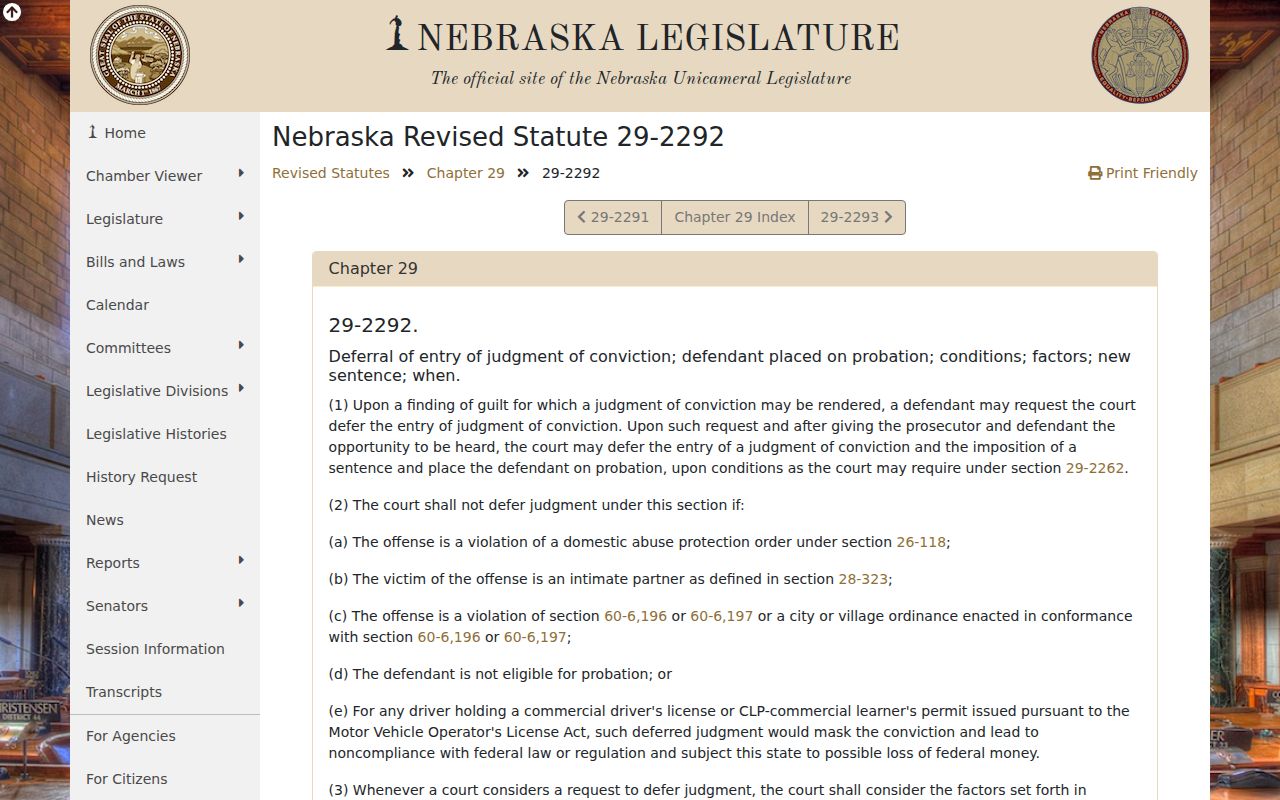
Follow the full sequence: charge, then the later plea, order, judgment, dismissal, or sentencing event.
Stages on a Criminal Docket
A Platte County criminal register normally records a case from filing to a court event and then to an outcome. County Court and District Court can follow different paths. The reason is that offense level and court assignment differ. An arraignment informs a defendant of a charge and provides a plea opportunity. A pretrial or status setting manages the case. A trial setting is not proof a trial happened. A later verdict, judgment, reset, or other entry resolves that question.
Docket flow: Filing → Arraignment → Pretrial → Plea or Trial → Disposition → Sentencing
After any hearing entry, read forward through the docket. A continuance, reset, or later setting can replace the earlier date.
Platte County Criminal Caseload Context
Caseload totals give useful context, but they are not live docket counts. The FY2025 County Court report credits Platte County with 1,103 misdemeanor cases and 1,438 traffic cases. It also lists 212 felony cases. Treat that 212 carefully. It is not a list of open District Court cases. The reason is that County Court data also covers preliminary felony activity. A real case search still begins with the court and the actual register.
Those categories explain why offense level, court field, and case type are useful filters when a party name returns many results.
Which Court Holds Criminal Dockets
Which Platte County office you call depends on the charge. Misdemeanors, infractions, traffic tickets, municipal-ordinal cases, and preliminary felony matters sit with Platte County Court. Felony trial-level dockets belong to Platte District Court. There is no separate juvenile court here. County Court fills that role. Juvenile access rules can still hide parts of a file from a public docket search, even when that clerk is the right contact.
The Platte County Court page and the Platte District Court page lay out that split. So does the state Platte County Court directory. JUSTICE indexes both court levels. Still, each clerk can only handle records that clerk's own court maintains.
Note: A city name or law-enforcement agency on the docket does not pick the court. The case's court field and case type do.
Unavailable Platte County Criminal Images
A docket entry and a document image are different things. Nebraska attaches post-April 16, 2008 nonconfidential images to one-time JUSTICE searches. Still, plenty of register entries have no public PDF. The paper file may never have been scanned. The upload may be too fresh. Or the item may fall outside image coverage, or be restricted. Even an image you can open online is not a clerk-certified copy.
So work from the register. Copy the court, case number, document name, and date. Then ask the County Court clerk or District Clerk holding the Platte County criminal case about a document request. The statewide CC 3:29 form covers certified and noncertified County Court copies. For older records, a retention-status check with the clerk beats another online search.
The state's criminal-record rehabilitation information keeps rehabilitation separate from ordinary public docket access.
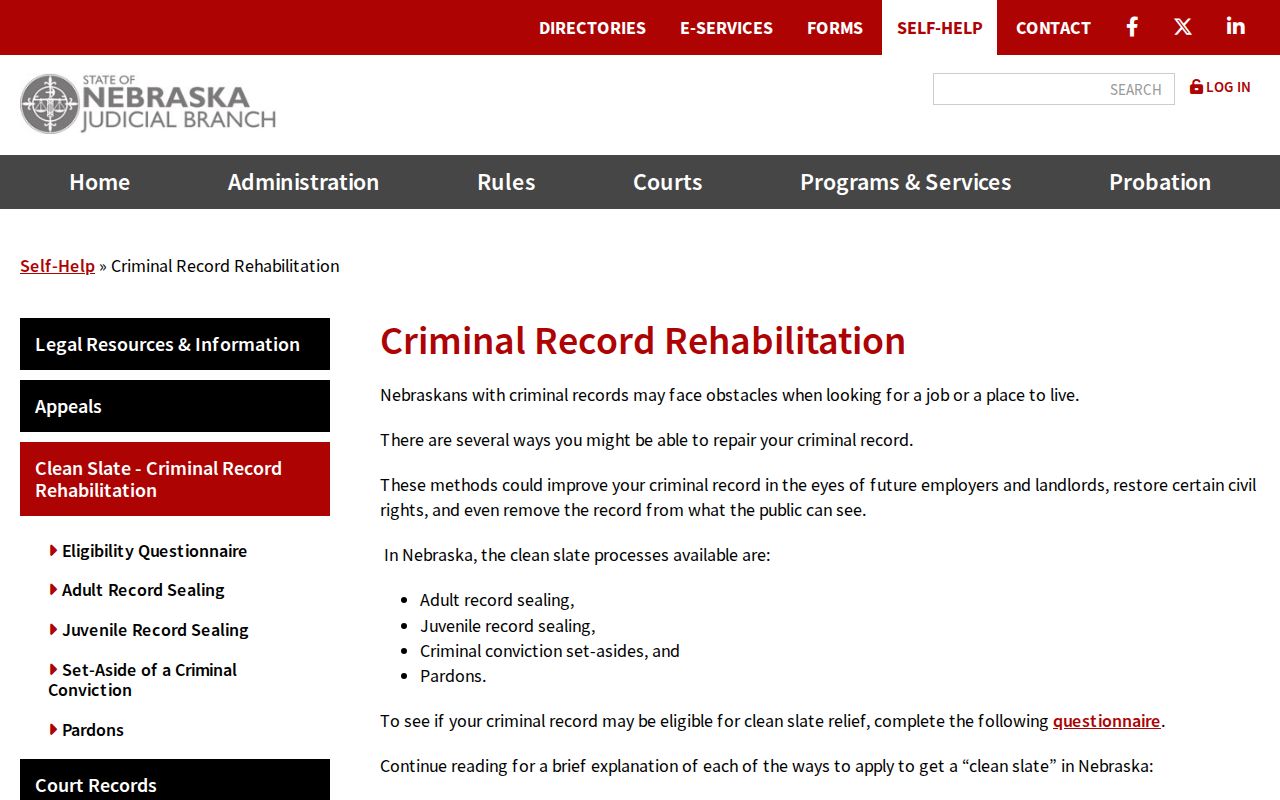
A missing image calls for a clerk request, not a guess about the case result.
Public Access and Sealed Criminal Dockets
JUSTICE, authorized remote access, and courthouse terminals all expose public court-case information. Rules, laws, and maintenance limits still apply. In Platte County you can search a terminal at the courthouse. Call the County Court clerk for county-court matters. Or go to the District Clerk for District Court felony records. A record can show in the register but lack a public image. Paper not yet converted, sealed material, restricted filings, juvenile matters, and files destroyed under a retention schedule each carry their own access boundaries.
Sealed is not the same as deleted or destroyed. Official juvenile guidance says qualifying juvenile records may seal automatically under stated conditions. A request path may apply otherwise. Platte County juvenile matters live in County Court, so confirm file status with that clerk.
Key Rules:
Nebraska Judicial Branch Article 8 makes public case information available through approved channels, subject to access limits.
Nebraska Supreme Court Rule §2-215 provides that filings are public unless law, rule, or order restricts them.
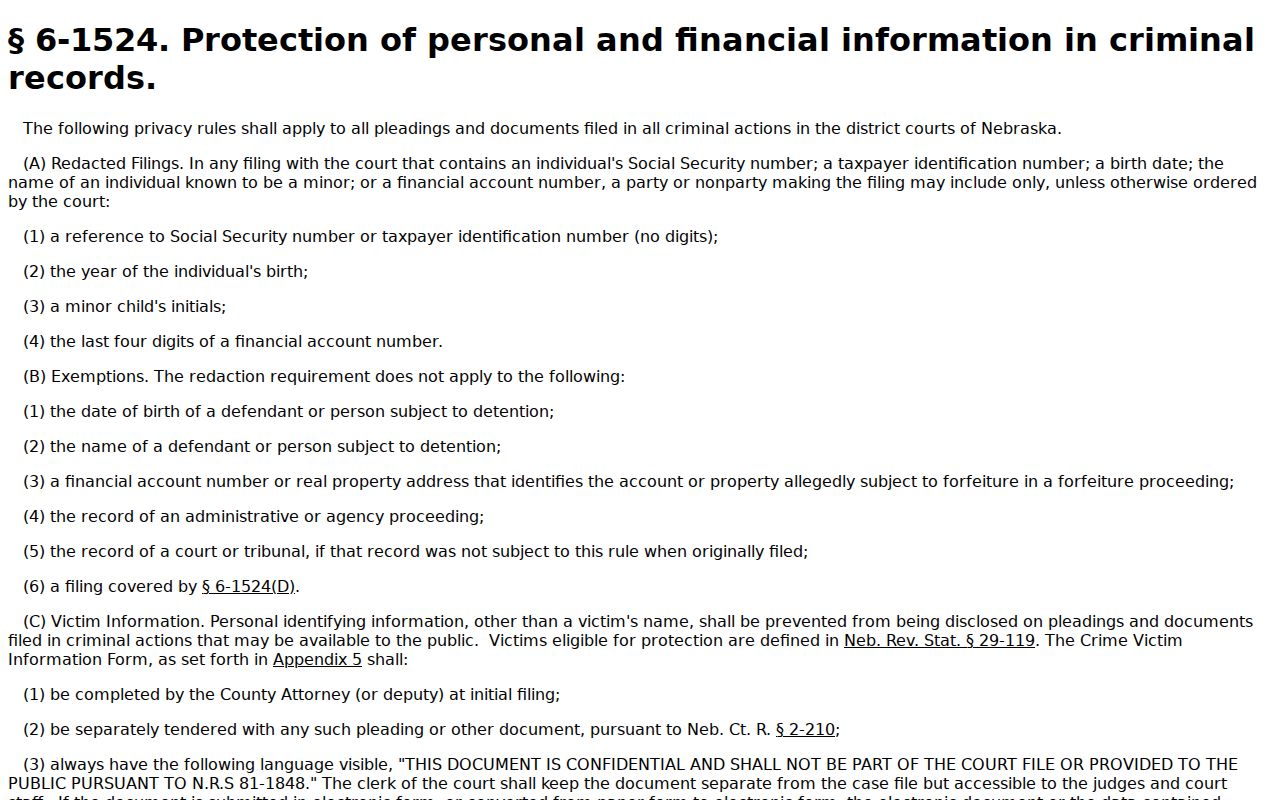
Criminal redaction rule §6-1524 protects listed personal identifiers in public criminal filings.
The official juvenile record-sealing page explains the access limits that can affect a Platte County County Court result.
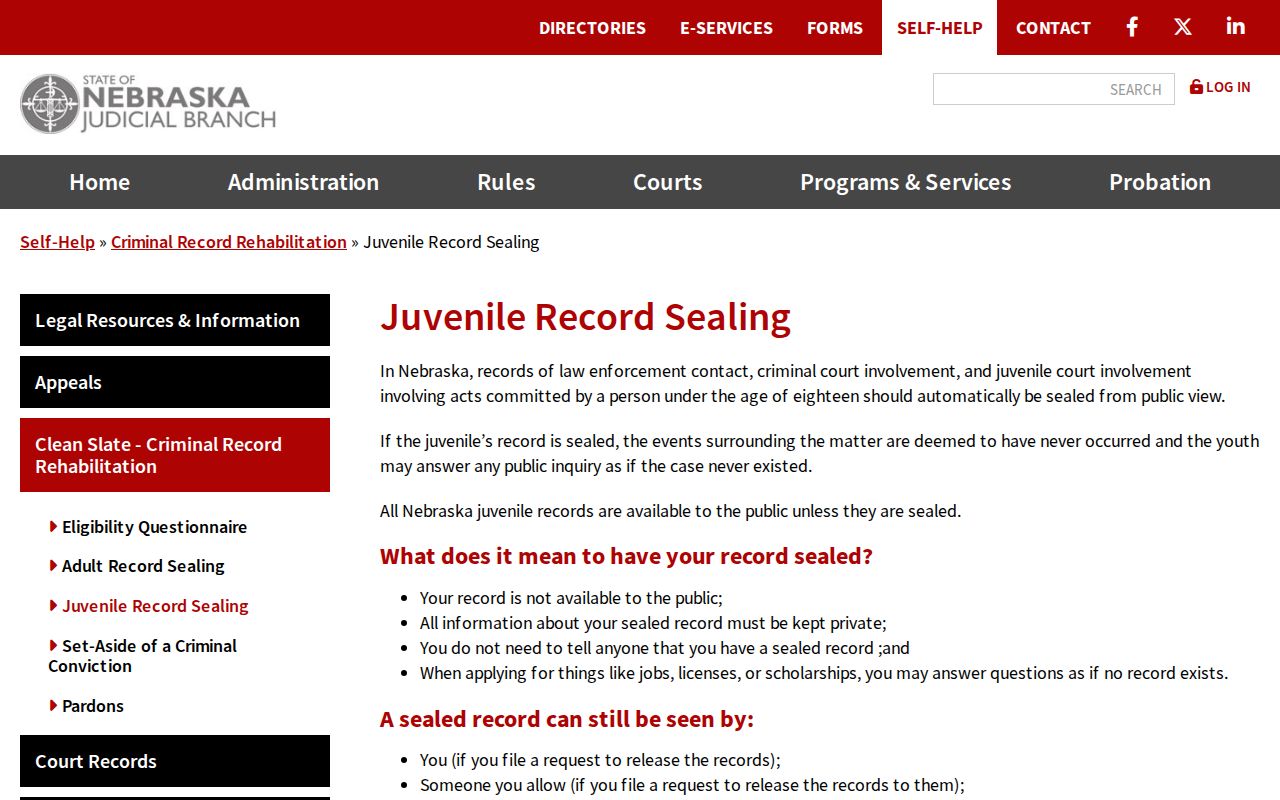
If you have a legally authorized reason to see a restricted record, use the clerk's procedure. A public docket search is not a way around it.
Platte County Criminal Redactions
A redaction is not a missing file. Nebraska's criminal redaction rule strips or trims full Social Security and tax identifiers, full birth dates, minor-child names, and most financial-account digits from public filings. The rule lists exceptions. A judge may seal a filing without redaction for good cause. Presentence and predisposition material can follow separate access rules. The register stays public to the extent the law allows.
The official §6-1524 criminal redaction rule lists every protected category.
For a given Platte County criminal docket, the record, the order, and the clerk can tell you whether a missing detail is redacted, restricted, paper-only, or gone after retention.