
How to Search the Duncan Court Docket
The paper tells you where to look. Duncan village government offers no online docket. It posts no citation-payment system or court fee schedule of its own. Start with the court printed on the citation. The Nebraska JUSTICE public search covers Duncan matters through County Court. Use a Platte County selection there. A case assigned to District Court needs the District Court branch of that same search.
- Use the Duncan citation or notice to identify the named court, party, case number, and county.
- Enable JavaScript in JUSTICE, accept the terms, and start with a party name or exact case number.
- Narrow a Duncan result with Platte County, court type, case type, year, or other available criteria.
- Open the case and read the chronological Register of Actions, current setting, and final entry separately.
- Use the court calendar and clerk to confirm a Duncan setting, a missing result, or the correct copy route.
JUSTICE charges a $17 one-time search fee. You pay it even when no Duncan result comes back. The search stays open for three calendar days. It returns up to 30 public cases. Fresh filings can take about 24 hours to appear, so timing matters. Do not assume a file does not exist. Double-check the court, county, spelling, case type, restriction status, and retention rules.
Duncan Court Docket and Village Records
Duncan's village materials give civic context and ordinance text. They are not a court docket. The county profile puts Duncan at 386 people in 2024. Village government records and county judicial records stay separate. They connect only through the citation or case named on the paper. There is no shared online database between them.
A Duncan ordinance may be what a charge rests on. Still, the ordinance text is not the court record. It is not the Register of Actions, current hearing date, judgment, or certified case record. Nebraska's city-and-village filing rule and County Court jurisdiction explain why Duncan ordinance matters route through County Court. Search the court named on the citation. Do not hunt for a village docket that does not exist.
For the local-government side of that divide, the official Village of Duncan website is the place to look.
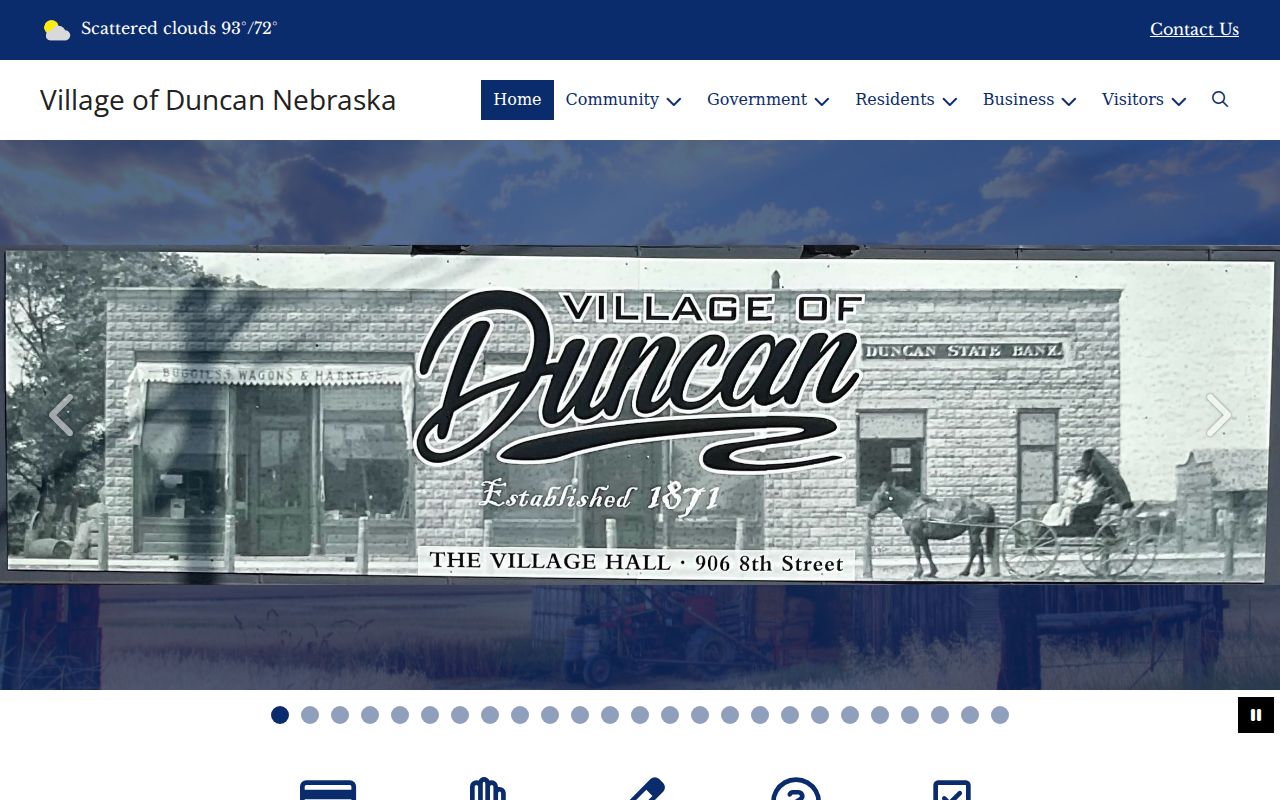
Duncan's village site covers municipal government information. For a case in Platte County, the court register remains the separate source.
The Duncan Municipal Court
Duncan has no separately searchable municipal court. Nebraska routes Duncan traffic, misdemeanor, infraction, and municipal-ordinance matters through County Court unless the citation names another venue. The Platte County Courthouse sits in Columbus, with the County Court office on the second floor. That is the practical channel for a Duncan court docket.
The absence of a Duncan city court does not mean every local matter works the same way. Trust the printed court and county on your citation or filing. If the paper says County Court, use that docket. If it names a different court, follow that one. The Duncan name explains where an event happened, but it cannot pick the office that holds the record.
The county's County Court page, District Court page, and About page offer Platte-specific court and courthouse details.
For a Duncan case record, calendar entry, paper file, certification, or restricted-record question, call the County Court clerk at 402-563-4905. A Duncan case sitting in District Court goes to 402-563-4906. Either clerk can sort out what the docket does and does not show.
Duncan Court Docket Search Filters
Narrow beats broad. A statewide name search will drown you. A focused Duncan docket search gets you the case instead. JUSTICE starts with a party name, then lets you refine by court type, case type or subtype, county, year, judge, attorney, case number, and judgment date. The two filters matter most for Duncan. They are the confirmed court and Platte County. Case type separates traffic from civil, probate, juvenile, criminal, and other categories.
| Duncan record question | Filter or record field |
|---|---|
| Which court holds the case? | Confirm County Court or District Court from the citation and the case summary. |
| Is the result a Platte case? | Check the county field before treating a name result as a Duncan match. |
| What type of matter is it? | Use case type or subtype and read the case header. |
| Is the exact file known? | Copy the case number exactly from a clerk, citation, or live JUSTICE result. |
Do not guess at a Duncan or Platte case-number pattern. No official source publishes one. If a search returns more than 30 results, narrow it with the available fields instead of treating that first list as the complete Duncan record history.
Duncan Court Dates and Settings
Duncan court dates show up on Nebraska's statewide calendar. First pick County Court or District Court and Platte County. You can search by current or future date or by last name. The Nebraska court calendar is separate from the JUSTICE case-information search. A complete Duncan check uses both the calendar and the Register of Actions.
An empty calendar result does not mean no hearing exists. The calendar itself warns that entries may lag. A Duncan hearing can also be reset, continued, passed, or replaced. Read the latest dated register entry. Call the clerk when a date affects an appearance or deadline.
| Date | The current Duncan-related setting date shown in the case record or calendar. |
|---|---|
| Time | The listed time for the scheduled event, when published. |
| Court | County Court or District Court, which identifies the record custodian. |
| Location | The court location or courtroom identified in the official calendar. |
| Setting type | The listed court event, such as a hearing, arraignment, trial, or another action. |
A setting is only a scheduled event. It is not proof the hearing happened. Current Duncan status comes from the record's own sequence, plus clerk confirmation when the docket leaves room for doubt.
Duncan Court Docket No-Result Steps
Hit a blank on a Duncan docket search? Work through it in order. Check the spelling first. Then check the court level, the county, the case type, and the case number. Give the public entry about 24 hours to catch up. New filings lag briefly. Search the calendar separately, because it sits apart from the case register. If nothing surfaces, call the County Court or District Court clerk. Have the caption, case type, date, and any citation number ready.
No image is not the same as no case. Nonconfidential images filed or uploaded after April 16, 2008 can show up in a one-time search. Yet one may be missing because the filing is restricted, exists only on paper, is still processing, or falls outside coverage. And a viewable image is never automatically a certified copy.
One more reason exists. The record may be sealed, restricted, juvenile-limited, or destroyed. A public search cannot stand in for the clerk. The clerk can explain the authorized request route. A destroyed record cannot be rebuilt from a failed online lookup.
Duncan Traffic Tickets
Trace a Duncan traffic ticket by its issuing court. The county it belongs to matters too. Traffic, infractions, and municipal-ordinance matters in Platte County normally land in County Court. The village itself offers no separate citation lookup or payment portal. Search JUSTICE by party or case number. Narrow the results to the right court and Platte County, and then read the register for the current setting and record status.
Paying online does not always erase a Duncan court appearance. State ePayments guidance warns that a wrong case number may require contacting the issuing court directly. The same applies to a ticket outside the eligible or post-judgment category. Check the citation and the docket before acting. A financial entry also may not prove the whole case is over.
The Platte County traffic court records page lays out the countywide route. Keep the ticket and its court name handy. The village name alone does not identify a docket database.
Duncan Court Docket District Context
Duncan dockets live inside a Platte County system that also carries District 5 court programs. The Nebraska Judicial Branch's Justice Jason Bergevin investiture announcement gives official context on state judicial leadership and problem-solving court work. It will not return a Duncan case result, a hearing date, or any disposition.
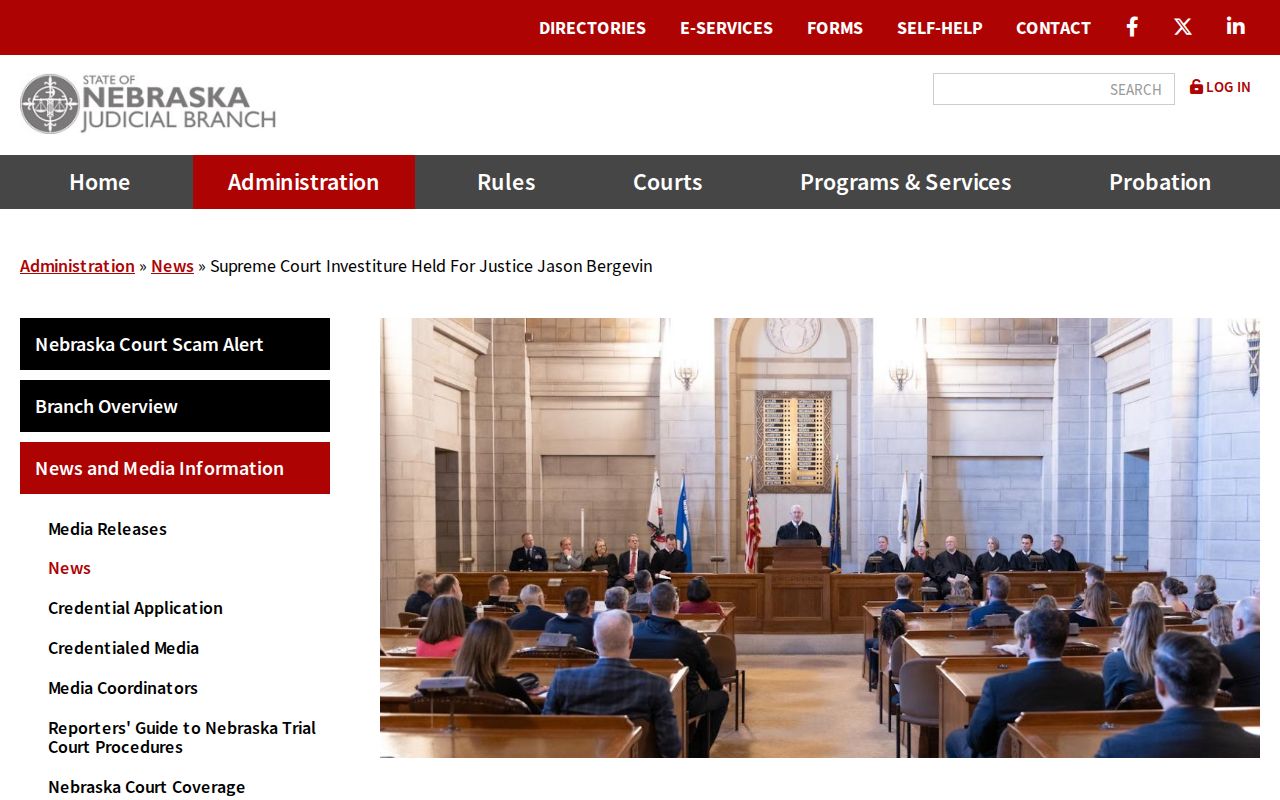
The investiture gives Duncan readers documented statewide context. Each individual case still rests with its own court record and clerk.
That line matters. An announcement can describe the court system broadly, while the Register of Actions lists the dated filings, hearings, orders, and results in one particular file.
Where Duncan Cases End Up
Where a Duncan case lands depends on four things. They are the citation, the filing, the statute, and the subject matter. County Court keeps the countywide dockets. Traffic, misdemeanor, infraction, ordinance, probate, small-claims, limited-civil, and county juvenile files all sit there. District Court holds the felony, major civil, domestic-relations, and appellate-from-county files. The village location adds no third, independently searchable Duncan court docket.
Docket flow: Duncan village matter › Platte County Court or District Court › Nebraska Court of Appeals, with potential final review by the Nebraska Supreme Court.
For the full Platte split between County Court and District Court, start at the Platte County court docket home. A federal case goes through PACER and the federal clerk instead of Nebraska JUSTICE, even when the event ties back to Duncan.
Duncan Court Docket Program Milestone
The Platte County problem-solving court's first graduation in January 2026 is a public milestone for District 5, which serves the Duncan court route through the county. The Judicial Branch graduation advisory is the official account of that event. Read it for civic context only. It reveals nothing about participation, a disposition, or a current status in any Duncan case.
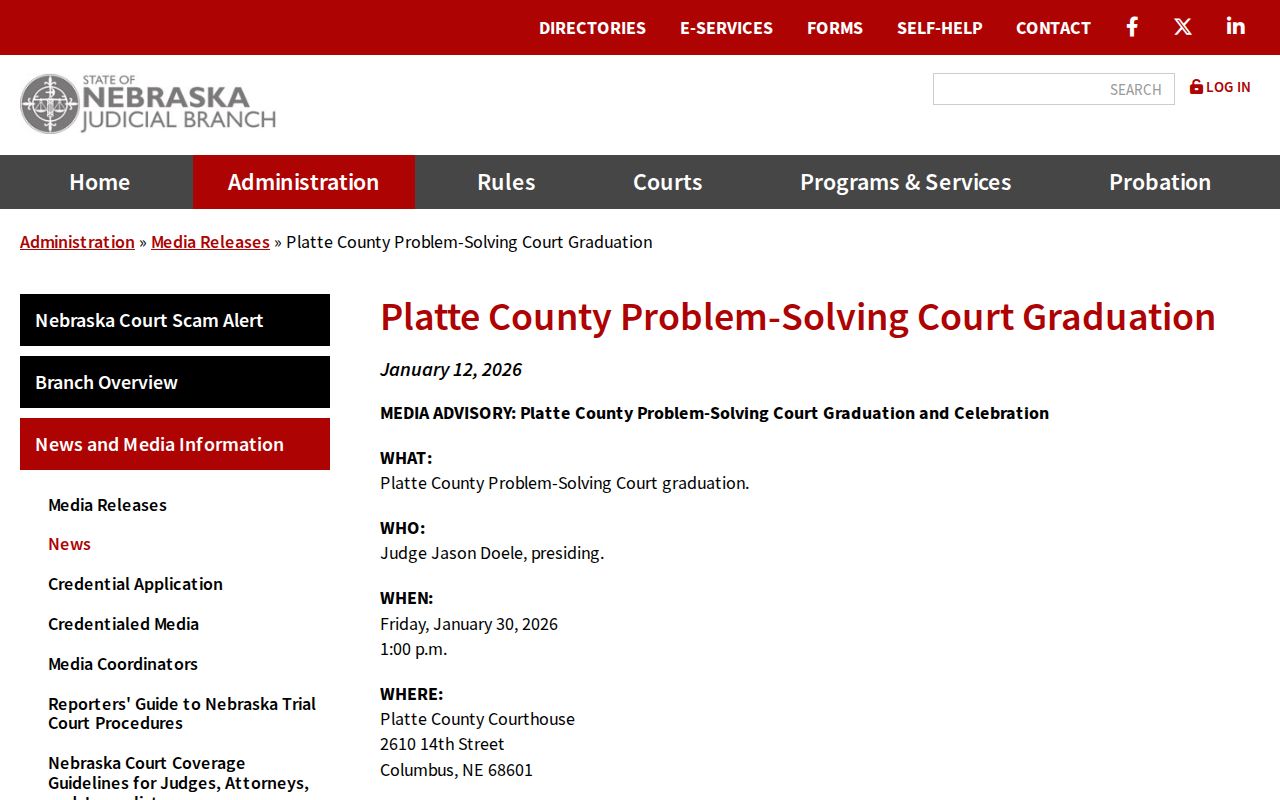
The graduation marks a court-system moment for Duncan. The individual docket still governs a specific file's orders and setting.
Track a Duncan case through the named court. Use the case number, the calendar, and the clerk. Program news adds context but no second path to case records.
Public Access to Duncan Court Records
Duncan court records flow through Nebraska's court-record framework. The practical order runs from court identification to JUSTICE search, register review, and a calendar check, then to a courthouse terminal or the clerk, and finally to a copy or inspection request from the actual custodian. County Court and District Court keep records separately. A public image need not be certified, and a public record need not be digitized for remote viewing.
Key Rules:
Neb. Rev. Stat. § 84-712 allows examination of public records and personal notes or copies during office hours, subject to limits and custodian copy fees.
Nebraska Supreme Court Rule § 2-215 treats filings as public unless restricted and permits electronic inspection at the listed public locations.
Nebraska Judicial Branch Article 8 describes remote access, courthouse terminals, public fields, fees, and court-record limits.
Access from Duncan can hit barriers. These include sealing, juvenile rules, protected identifiers, restricted filings, paper-only records, and destruction under a retention schedule. Criminal public filings redact specified personal identifiers. Ask the correct clerk about the proper route for a restricted record. A public-search hit, or a no-result, never settles the access question by itself.
Duncan Court Record Access Paths
Duncan offers several ways to reach its court records. The JUSTICE system runs a paid Duncan public search. A statewide Duncan calendar covers hearing dates, and the statewide framework also opens courthouse terminals to the public. For direct contact, call County Court at 402-563-4905. District Court shares the Columbus courthouse and takes Duncan district matters at 402-563-4906. Either clerk can handle paper files, current copy instructions, certification, and the rules for restricted records.
Work the fallback chain in order. Try the online case search first, then the calendar, then a courthouse terminal. After that comes the clerk counter or a phone call, followed by mail, fax, email, in-person copies, or formal inspection as the clerk directs. A certified Duncan copy never comes from the public portal as the final authority. Federal Duncan cases skip County Court entirely. Use the PACER Case Locator and the federal clerk route instead.
Keep the source families separate and the Duncan docket route gets simple. Village materials supply civic context. The named state court keeps the actual court docket.